
Our highlight occasion is a gala dinner, usually held each year. The guest speaker is a prominent Australian and the venue may be in a different capital city. Check back regularly for upcoming events.
The Foundation expects to hold its 2026 Dinner at the end of this year. It will be in Canberra.
If you would like to be added to an invitation list, please contact our Secretary for further details. Mr Warwick Costin can be reached by email at costinw47@live.com.au.
Previous events
10th Anniversary of the Dedication of the War Correspondents Memorial, September 2025
The CEW Bean Foundation, in conjunction with the Australian War Memorial, commemorated the 10th anniversary of the dedication of the War Correspondents Memorial in Canberra in 2025.
CEW Bean Foundation chair, Rodney Cavalier, gave the address. It can be read here.
2024 Dinner, Canberra
The Governor-General of Australia, Her Excellency Ms Sam Mostyn AC, addressed the C.E.W. Bean Foundation and a large gathering of guests at the Australian War Memorial on 20 November 2024. She spoke warmly and generously about journalism and the work of the Foundation. Displays of equipment used by past and present war correspondents decorated Anzac Hall.
You can read the Governor-General’s speech here.
Symposium and Radio National Broadcast
On 30 August 2018 the C.E.W. Bean Foundation partnered with some high profile speakers to present a Symposium entitled “The Real Charles Bean”, held at The Museum of Australian Democracy in Old Parliament House, Canberra. Speakers included Hon Dr Brendan Nelson AO, former Director of the Australian War Memorial (and a Director of the C.E.W. Bean Foundation), Chris Masters, acclaimed author and investigative journalist, Peter Rees, biographer of Charles Bean, and Karen Middleton who spoke on the rise of female war correspondents.
The Symposium was hosted and Moderated by Rodney Cavalier AO, former Chair of the C.E.W. Bean Foundation. ABC Radio National’s Big Ideas program recorded the Symposium and it was broadcast on 8 November 2018.
The audio is available here.
2018 Dinner, Melbourne
This C.E.W. Bean Foundation’s event was jointly held with the Melbourne Press Club in February 2018. The address, “Chester Wilmot, War Correspondent, Historian, Interpreter of Words” was delivered by My Paul Kelly. Paul is the Editor-at-Large for The Australian newspaper and is a Director of the C.E.W. Bean Foundation.

2016 Dinner, Sydney
In November 2016, we were honoured to present a special Dinner in the Trustee’s Suite at the Sydney Cricket Ground, with the NSW Governor, His Excellency General David Hurley. Hosted by C.E.W. Bean Chairman Rodney Cavalier AO and attended by many notable and distinguished guests, speakers included Tony Walker, Mark Riley and Malcolm Colless. His Excellency gave the keynote address on the theme of the Korean War, with a vote of thanks from Hon John Faulkner.
Dedication of the War Correspondents Memorial, in Canberra 2015
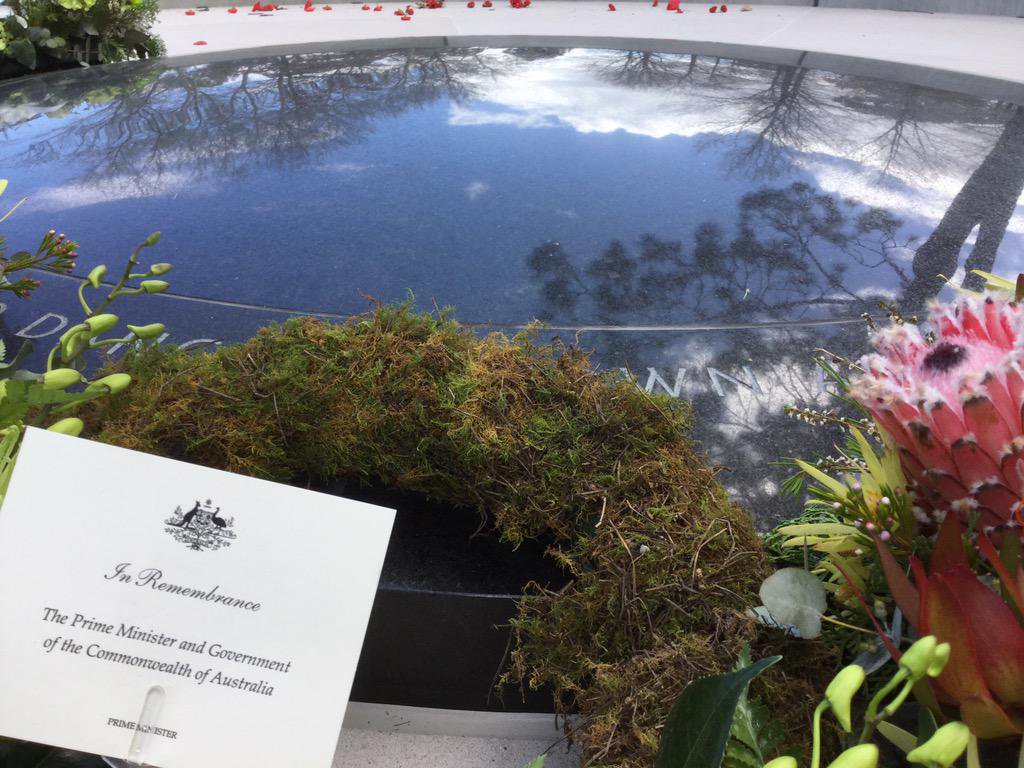
Our major event in 2015 was the Dedication of the War Correspondents Memorial, held in the grounds of the Australian War Memorial in Canberra on Wednesday 23 September 2015. The Dedication was made jointly by the then Prime Minister of Australia, Hon Malcolm Turnbull MP, and the Chair of the Council of the Australian War Memorial, Kerry Stokes AC – amongst many other distinguished guests.



Parliamentary Press Gallery Mid Winter Ball, 2015
The C.E.W. Bean Foundation was the fortunate beneficiary of the 2015 Mid Winter Ball. With the theme of “Winter Wonderland”, an amazing $25,000 was allocated, and gratefully received.
2014 Dinner, Canberra
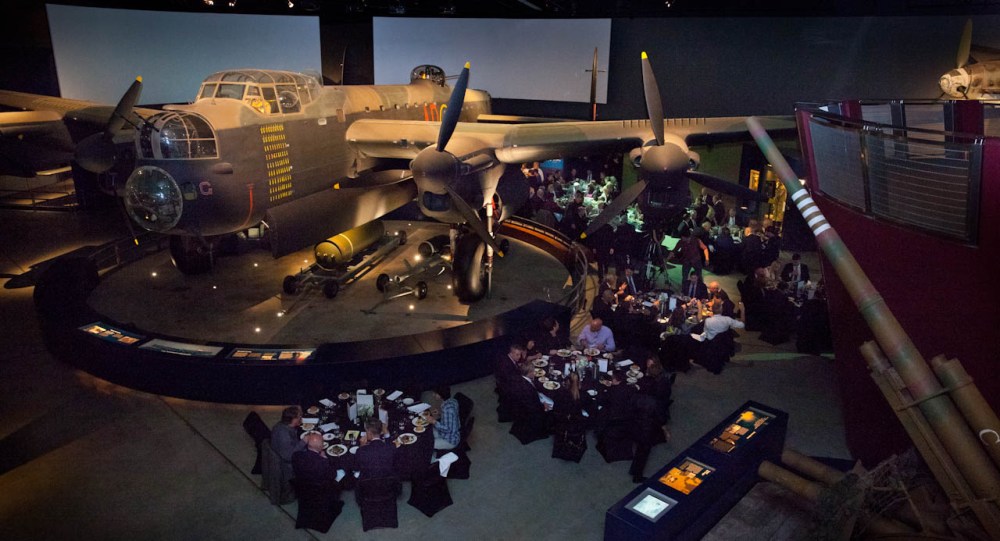
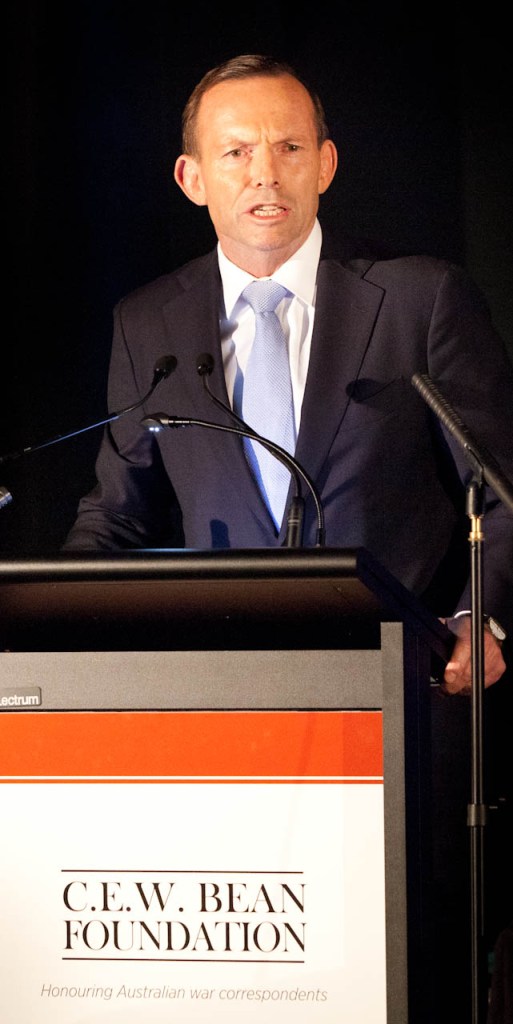
In April 2014, Australia’s then Prime Minister, Hon Tony Abbott MP, was the Guest of Honour and delivered an address at the Australian War Memorial underneath the imposing Lancaster bomber “G for George”. The dinner attracted 150 guests from a broad cross section of political life, diplomacy, media, military and industry figures. Special thanks to Boeing for their great support.
2013 Dinner, Melbourne
Air Chief Marshal Sir Angus Houston AC addressed a Bean Foundation dinner at the Melbourne Savage Club on June 29 2013 in his capacity as Chair of the ANZAC Centenary Committee. He outlined plans for the Centenary to a capacity audience.
2012 Lunch with John Hamilton, Melbourne
Author John Hamilton spoke at a Bean Chapter lunch at the Melbourne Savage Club on November 15 2012 about his new book “The Price of Valour’’ about Hugo Throssell VC. The lunch in the Savage Club boardroom was fully subscribed.
2010 Dinner, Canberra
On 26 February 2010, Defence Minister John Faulkner addressed the Bean dinner (held over from 2009) at the National Press Club on the subject of the responsibilities of the defence forces to provide reasonable disclosure to media involved in reporting their activities. Author Graham Freudenberg spoke at a pre-dinner event on his new book “Churchill and Australia’’. The Freudenberg conversation was moderated by Bean Foundation chair, Rodney Cavalier.
Parliamentary Press Gallery Mid Winter Ball, 2010
A great honour for the C.E.W. Bean Foundation in being allocated $20,000 from the enormous fundraising efforts of the Mid Winter Ball, held in Parliament House Canberra.
2009 Seminar, Canberra
Media, Truth and Conflict. With the University of Melbourne and the C.E.W. Bean Foundation, 2009. At a two day program courtesy of the National Library of Australia, guest speakers covered a range of interesting topics in plenary and panel sessions.
2008 Dinner, Canberra
Prime Minister Kevin Rudd gave the annual Bean oration – the third by a serving Prime Minister (if Turkish Prime Minister Recep Tayyip Erdogan is included) – in the ANZAC Hall at the Australian War Memorial in Canberra on 26 April. Mr Rudd argued that Australia’s presence in Afghanistan reflected its commitment to “doing our fair share to tackle international security challenges as an engaged middle power and as a real partner in our alliance with the United States.’’
2006 Dinner, Canberra
The Director General of the Australian Security Intelligence Organisation, Paul O’Sullivan, gave the annual Bean dinner address on Anzac Day 25 April. He spoke at the National Press Club on the subject of security threats following the terrorist attacks on the United States in September, 2001. A pre-dinner seminar addressed challenges facing journalists in dealing with the global war on terror.
2005 Dinner, Canberra
The 2005 dinner was held at the Australian War Memorial and addressed by the Prime Minister of the Republic of Turkey Mr Recep Tayyip Erdogan. The pre-dinner symposium was addressed by the Attorney General of Australia, the Hon. Phillp Ruddock MP, Mr Warren Beeby of News Ltd and author and journalist Mr Fred Brenchley. The topic was sedition and censorship in relation to the War on Terror.
2004 Dinner, Sydney
The 2004 dinner was held in Sydney with then NSW Premier Bob Carr as the dinner speaker. The pre-dinner symposium was addressed by Alisdair McGregor, the biographer of WWI photographer Frank Hurley; Neil McDonald the biographer of WWII broadcaster and author Chester Wilmott and Phillip Knightley, journalist and author of The First Casualty.
2003 Dinner, Melbourne
The historian Geoffrey Blainey gave the annual Bean dinner address.
2002 Dinner, Canberra
Then Defence Minister, Senator Robert Hill, delivered the annual Bean dinner address at the Hyatt Hotel Canberra. The title of his speech was “Asia Pacific Security After September 11 – Continuity and Change”. Senator Hill spoke about the “arc of militant Islamic influence” which stretched across South-East Asia, and the organisation Jemaah Islamiyah which was central to this threat.
2001 Dinner, Canberra
Then Prime Minister, Hon John Howard MP, gave the inaugural Bean dinner address. Senator the Hon John Faulkner also delivered a speech to the Senate. John Faulkner later joined the Board of the C.E.W. Bean Foundation.
Previous projects
Launch of Myth-Maker, the story of Ellis Ashmead Bartlett, the British correspondent who lit the ANZAC flame. – April 25, 2005
At a function preceding the 2005 C.E.W Bean Dinner, the Foundation launched Fred and Elizabeth Brenchley’s book Myth-Maker, the story of the British war correspondent whose report of the landing at Gallipoli on 25 April 1915 scooped the official Australian war correspondent C.E.W Bean, and who, with Australian journalist Keith Murdoch, broke censorship to secure the allied evacuation from Gallipoli.
Joint Project with the National Library of Australia to establish a set of digitised records of correspondents’ reports from Gallipoli. – April 25, 2005
The foundation worked with the National Library of Australia to establish a digitised collection of reports from Gallipoli, that is, to put them on a website so they are accessible on-line. Given that, but for the correspondents of the time, Anzac Cove would never have had the enduring role in our national life that it has come to have. To be able to put these reports on a website is invaluable for schools, tertiary students and even for those backpackers who now go in their thousands to Gallipoli each year. Correspondents include Charles Bean, Ellis AshmeadBartlett, Phillip Schuler and Keith Murdoch.
This project was supported by the Government’s Distinctively Australian program. Phase 1 of the project was completed and opened on the National Library website in the week leading to Anzac Day, 2005.
Support for Melbourne University Project
The Foundation successfully supported a bid for an application for an Australian Research Council Linkage Grant by Fay Anderson and Richard Trembath from the University of Melbourne for a research project to examine the contribution of Australian correspondents who reported on major wars and international conflicts in the 20th century.
The research began with the Boer War when an elite corps of journalists was born. The themes of the project included: the journalists’ experiences; the discourses that defined Australian soldiers and national identity; the mythmaking and truths; the extent of the war correspondents’ influence on the public and how they shaped attitudes to war, allies, enemies and race; how correspondents contributed to the official military version of particular conflicts and when and why they deviated from it; how reporting has changed over time; the treatment of correspondents by the military and the establishment; the style of media coverage; the extent of censorship and the role of political and military pressure.
The 512-page book, Witnesses To War: The History Of Australian Conflict Reporting, was published in 2011. Read more about the book or buy a copy here.

